

Unpacking Indonesia’s Mandatory Healthcare System and Its Real Impact on Your Business Bottom Line
So you want to hire top talent from Indonesia, right? It makes perfect business sense, especially when you look at the cost savings compared to the local talent crunch in Singapore. But wait a minute, lah. Before you start sending out those offer letters and calculating your massive savings, there is a massive elephant in the room that you absolutely cannot ignore. It is called BPJS Kesehatan, and it is the mandatory national healthcare system that every single employer in Indonesia must navigate. Understanding this system is not just about ticking a compliance box; it is about protecting your business from unexpected liabilities and ensuring your new Indonesian team members are properly taken care of. Let us dive deep into the sensational, sometimes controversial, but always crucial world of BPJS Kesehatan.
The Mandatory Nature of BPJS Kesehatan
When you decide to expand your team across the Malacca Strait, you are stepping into a regulatory environment that takes social security very seriously. BPJS Kesehatan, which stands for Badan Penyelenggara Jaminan Sosial Kesehatan, is the Social Security Administrative Body for Health in Indonesia. It is not an optional perk you can dangle to attract candidates; it is a strict legal requirement mandated by the Indonesian government for all residents, including expatriates who have worked in the country for more than six months.
The system is designed to provide universal health coverage, and the government enforces participation rigorously. If you think you can bypass this by offering a private international health insurance plan, think again. The law dictates that BPJS Kesehatan contributions must be paid regardless of any supplementary private insurance your company might provide. This mandatory nature means that as a Singaporean business owner, you must factor these contributions into your payroll calculations from day one. Failing to register your company and your employees can lead to severe administrative sanctions, including the inability to obtain necessary business licenses or process work permits. The bureaucratic process itself can be daunting, requiring specific documentation like the Business Identification Number and the company National Tax ID, along with coordinating with designated relationship officers. Therefore, understanding the non-negotiable status of BPJS Kesehatan is the foundational step in your Indonesian hiring journey.
Calculating the True Cost of Compliance
Now, let us talk numbers, because that is what truly matters when you are evaluating the cost-effectiveness of hiring from Indonesia. The contribution structure for BPJS Kesehatan is straightforward but has specific caps that you need to understand to project your expenses accurately. The total premium is set at five percent of the employee’s monthly salary. Out of this five percent, the employer is responsible for paying four percent, while the remaining one percent is deducted from the employee’s salary.
However, there is a crucial salary cap that prevents these costs from spiraling out of control for high earners. The maximum monthly wage used to calculate these contributions is capped at IDR 12,000,000, which translates to approximately SGD 924.00 based on the exchange rate of 1 SGD to 12,987 IDR. This means that the absolute maximum you, as an employer, will pay for BPJS Kesehatan per employee is IDR 480,000, or roughly SGD 36.96 per month. The maximum deduction for the employee is IDR 120,000, or about SGD 9.24. This contribution does not just cover the employee; it extends to cover their spouse and up to three children, providing significant value and peace of mind for your team members.
When you compare this maximum monthly employer contribution of SGD 36.96 to the CPF contributions required in Singapore, the cost advantage of hiring in Indonesia becomes glaringly obvious. This predictable and capped cost structure allows you to accurately forecast your payroll expenses and utilize tools like the BatamOn cost overview page to see your exact potential saving
The KRIS Controversy and System Overhaul
While the cost structure might seem appealing, the BPJS Kesehatan system is currently undergoing a massive and somewhat controversial transformation that you must be aware of. Historically, the system operated on a tiered class structure—Class 1, Class 2, and Class 3—which determined the quality of inpatient facilities a patient would receive based on their premium level. However, under Presidential Regulation Number 59 of 2024, signed by President Joko Widodo, the government is abolishing this class system in favor of a Standard Inpatient Class, known as KRIS (Kelas Rawat Inap Standar).
This transition, which must be fully implemented by all collaborating hospitals by June 30, 2025, has sparked intense debate across the archipelago. Health Minister Budi Gunadi Sadikin has had to publicly clarify the changes amidst public anxiety. The controversy stems from fears that those who previously paid higher premiums for Class 1 facilities might experience a downgrade in service quality, while the government faces the monumental task of upgrading lower-tier hospitals to meet the new KRIS standards. For you as an employer, this means your employees might express concerns about their future healthcare quality. It is essential to stay informed about this transition so you can communicate effectively with your Indonesian team and manage their expectations regarding the national healthcare system.
Navigating the Financial Deficits and Bailouts
Beyond the structural changes, BPJS Kesehatan has a notorious history of severe financial instability, which adds another layer of complexity to the narrative. The system has chronically operated at a massive deficit, driven by a combination of low premium collections from the informal sector and a high volume of claims for catastrophic illnesses. At times, this deficit has ballooned to staggering amounts, reaching an estimated IDR 20 trillion, which is approximately SGD 1.54 billion.
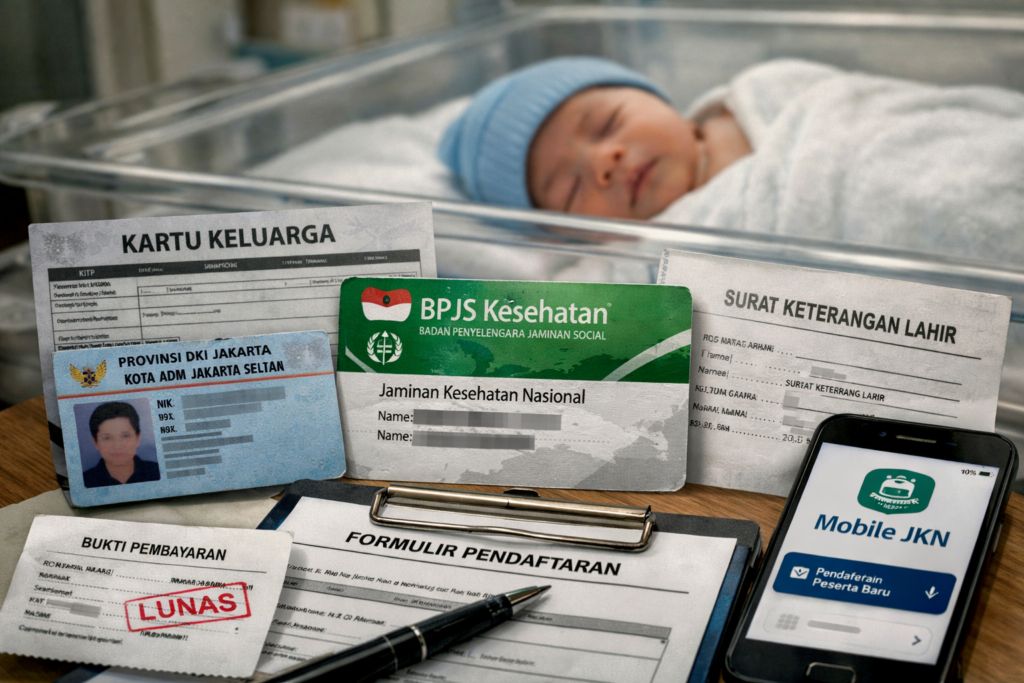
This financial shortfall has historically led to delayed payments to hospitals, which in turn has sometimes resulted in hospitals limiting services or treating BPJS patients as second-class citizens compared to those paying out of pocket or with private insurance. To prevent the system from collapsing, the Indonesian government has repeatedly had to step in with massive financial bailouts. For instance, in October 2025, the government allocated a massive Rp 20 trillion to clear the premium backlog and push for system reform.
While the government’s commitment to keeping the system afloat is clear, these financial woes highlight the systemic challenges BPJS Kesehatan faces. As an employer, understanding this context helps you comprehend why some of your top-tier Indonesian talent might still value supplementary private health insurance as a crucial benefit, despite the mandatory BPJS coverage.
Strategic Implications for Your Hiring Strategy
So, what does all this sensational news, bureaucratic red tape, and financial restructuring mean for your strategy to build a team in Indonesia? It means that while the financial savings are undeniably attractive, the operational execution requires nuanced understanding and strategic planning. You cannot simply treat Indonesian payroll like a plug-and-play system. The mandatory nature of BPJS Kesehatan, coupled with the ongoing KRIS transition and the system’s historical financial deficits, demands that you approach hiring with eyes wide open. You need to ensure absolute compliance to avoid crippling administrative sanctions that could halt your operations.
You also need to be prepared to address your employees’ concerns about the changing healthcare landscape. Offering a clear explanation of their BPJS benefits, and perhaps considering supplementary private insurance for key roles, can be a powerful retention tool. The complexities of registering your company, managing the monthly contributions, and navigating the deactivation process when an employee leaves require dedicated administrative bandwidth. This is where the true challenge lies for foreign business owners who are unfamiliar with the local regulatory environment. Visit our homepage to see how BatamOn Asia connects you with top Indonesian talent—backed by transparent costs and full compliance support.
Sources:
[1] Understanding mandatory healthcare and social security BPJS in Indonesia
[2] BPJS Kesehatan 2025: Transitioning to KRIS and Its Implications for Employers
[3] Government Sets Aside Rp 20 Trillion to Clear BPJS Premium Backlog
[4] Health Ministry Clarifies BPJS Kesehatan’s KRIS System