The Mandatory Bonus Your Business Should Be Prepared For
You know lah, Singapore bosses are always looking for smart ways to grow their teams without burning their budget. Hiring Indonesian talent especially from nearby Batam makes strong business sense. But here is something many foreign employers find out too late: the moment you hire an Indonesian worker, you step into a legal framework that comes with one very specific, non-negotiable obligation called THR. Miss it, and the consequences are real.
THR, or Tunjangan Hari Raya, is Indonesia’s mandatory religious holiday allowance equivalent to one month’s salary that every eligible employee is legally entitled to receive at least seven days before their religious holiday. It originated in 1951 under Prime Minister Soekiman Wirjosandjojo, became law through Regulation No. PER-04/MEN/1994 in 1994, and was strengthened in 2016 and beyond. Any employer hiring Indonesian talent under a local employment contract must pay THR or face fines, sanctions, and potential court action. For Singaporean SMEs and business owners, understanding this obligation is essential before engaging Indonesian talent and the right hiring partner can make compliance seamless.
This article is written for Singaporean business owners, CXOs, and SME leaders who are considering or have already started hiring Indonesian talent particularly from Batam for their Singapore-based operations. It explains what THR is, why it exists, how it is calculated, and what it means legally and financially for any employer who hires under an Indonesian employment relationship.
The Fiery Origins of THR
Tunjangan Hari Raya (commonly known as THR) is Indonesia’s mandatory religious holiday allowance. It is, by law, an extra one month’s salary paid to every eligible employee before their most important religious holiday of the year. But THR did not begin in a boardroom. It was born out of protest.
In 1951, Indonesia’s sixth Prime Minister, Soekiman Wirjosandjojo, introduced holiday allowances as part of his cabinet’s welfare agenda for civil servants, known then as pamong pradja. The amounts ranged from just Rp 125 to Rp 200 — modest by any measure, yet significant enough to spark outrage. Private sector workers were pointedly excluded from the policy. By 1952, thousands of workers across the archipelago walked off their jobs in what became a landmark series of labor strikes, demanding that the government recognize their equal right to holiday financial support. The pressure worked. Prime Minister Soekiman personally called on private companies to extend the allowance to their employees, and the practice rapidly spread beyond the civil service.
For decades, THR existed as a social norm rather than hard law. That changed in 1994 when the Ministry of Manpower formally codified it under Regulation No. PER-04/MEN/1994, making THR a legal obligation for all companies operating in Indonesia. In 2003, Law No. 13 on Manpower further entrenched it as a protected worker right. Then in 2016, Ministerial Regulation No. 6/2016 lowered the eligibility threshold: any employee who has worked for at least one month is now entitled to a pro-rated THR. What started as a rice and cash handout for bureaucrats in Sukarno’s Indonesia is today one of the most strictly enforced payroll obligations in Southeast Asia.
What THR Actually Means Culturally
To understand why THR carries such legal force, you need to understand what it means to Indonesian workers beyond the money. Indonesia is a deeply family-oriented society, home to the world’s largest Muslim population. Eid al-Fitr or Idul Fitri marks the end of Ramadan and triggers one of the largest annual human migrations on earth: Mudik. Tens of millions of urban workers travel home to their families in rural villages, bringing gifts, contributions, and financial support to their communities.
THR is not perceived as a corporate bonus. It is seen as a worker’s right a payment that allows families to celebrate, reunite, and redistribute wealth from Indonesia’s cities back to its villages. Economists describe Mudik as a massive, decentralized wealth transfer mechanism. THR is the financial engine that makes it possible. When an employer delays or withholds THR, they are not just breaching a regulation. They are disrupting a cultural institution that touches hundreds of millions of lives simultaneously.
Indonesia recognizes six official religions Islam, Protestantism, Catholicism, Hinduism, Buddhism, and Confucianism and THR applies to each. Muslim employees receive theirs before Eid al-Fitr, Christian employees before Christmas, Hindu workers before Nyepi, Buddhist employees before Vesak, and Confucianist employees before Chinese New Year. This means the obligation is not seasonal for multi-faith workforces, it recurs throughout the calendar year.
Who Pays, How Much, and When
The rules today are clear and firm. Under Ministerial Regulation No. 6/2016, every employer in Indonesia must pay THR no later than seven days before the employee’s relevant religious holiday. For Eid al-Fitr 2026 (projected around March 20–21, 2026) that deadline falls approximately on March 13–14, 2026. There is no grace period, and there is no option to stagger the payment.
Employees with 12 or more months of service receive a full one month’s salary. Those with shorter tenures receive a pro-rated amount, calculated as months worked divided by 12, then multiplied by the monthly salary. Critically, the salary used for this calculation includes basic pay plus all fixed monthly allowances — things like fixed transport or housing allowances. Variable components such as overtime, performance bonuses, and discretionary incentives are excluded.
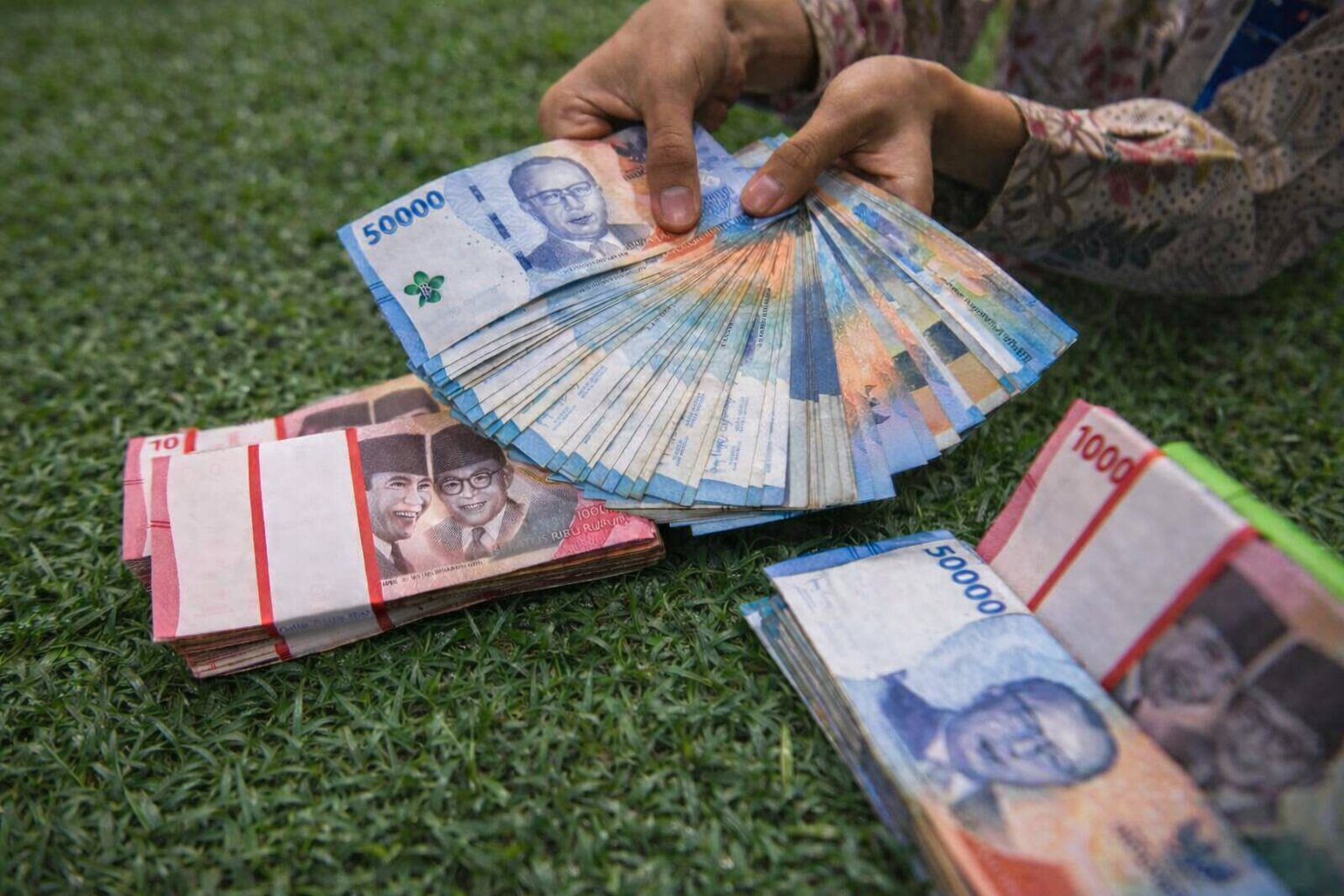
To make the numbers real: an Indonesian employee earning a fixed monthly salary of Rp 12,000,000 (approximately SGD 924 at a rate of 1 SGD to 12,987 IDR) and having worked 12 months or more is entitled to a full Rp 12,000,000 in THR. For a company with 100 employees, 60 with over 12 months of service and 40 with an average of six months, the total THR liability could reach approximately Rp 960,000,000, or roughly SGD 73,916, all due within a narrow window before the holiday. That is a sharp, single-month payroll spike that demands forward planning.
The Cost of Getting It Wrong
The Indonesian government takes THR enforcement seriously. Every year in the weeks before Eid, the Ministry of Manpower activates national THR complaint posts across the country. In 2025 alone, more than 1,400 formal complaints were filed nationwide by workers reporting delayed or withheld payments, a figure that reflects both the scale of the obligation and the willingness of Indonesia’s workforce to defend their rights.
The financial consequences of non-compliance are layered. An employer who fails to pay THR on time faces an administrative fine of five percent of the total THR owed, on top of still being required to pay the full amount. If the situation escalates, sanctions include written warnings, restrictions on business activities, delays in receiving or renewing permits, temporary suspension of production, and in severe cases, suspension of all business operations. The Industrial Relations Court is the final destination for disputes that go unresolved. As Cruisietta Kaylana, Assistant Manager of HR and Payroll at Dezan Shira & Associates Indonesia, noted: companies that plan for payroll growth but not for payroll timing are the ones most likely to face funding pressure during the THR payment window.
Expatriates and foreign executives are not automatically entitled to THR. The obligation is triggered by the nature of the employment contract: if a foreign worker is directly employed under an Indonesian entity and subject to local labor law, THR exposure exists. If the contract is governed offshore or the salary is processed outside Indonesian payroll, the obligation may not apply. But this distinction must be deliberately and correctly structured, it does not arise by default.
THR and the Wider Reality of Indonesian Employment Costs
For Singaporean SMEs exploring cross-border talent strategies, THR is one of several labor cost elements unique to the Indonesian employment framework that must be factored into any honest cost comparison. Beyond THR, employers in Indonesia are also expected to contribute to BPJS Kesehatan (national health insurance) and BPJS Ketenagakerjaan (social security for employment), which cover workplace accident protection, death benefits, and pension contributions. These are statutory obligations, not optional benefits.
Despite these additional costs, the overall compensation picture for Indonesian talent particularly from cities like Batamrem ains significantly more competitive than equivalent roles filled from within Singapore. The key is approaching Indonesian hiring with full awareness of the rules, not partial knowledge. An employer who budgets only for basic salary and misses THR, BPJS, and payroll tax remittances will face an uncomfortable surprise mid-year. But an employer who goes in with a complete understanding of the total cost model and partners with the right support structure will find the numbers compelling. The talent available, the proximity of Batam to Singapore, and the cultural alignment of Indonesian professionals make this one of the most practical talent strategies available to Singapore businesses today.
What This Means and What You Can Do About It
THR is not a loophole you can negotiate around. It is not an optional benefit you can choose to offer or withhold based on company performance. It is a statutory right, enforced by the state, backed by decades of labor history, and deeply embedded in the social fabric of Indonesia. Any Singaporean business that hires Indonesian talent under an Indonesian employment relationship carries this obligation — full stop.
The good news is that THR, when planned for properly, is entirely manageable. It is a predictable, annual cost that can be built into your headcount budgets like any other fixed expenditure. The challenge is not the obligation itself. The challenge is understanding it early, calculating it accurately, and having the right payroll infrastructure in place before the deadline arrives. That is where working with a knowledgeable hiring partner makes all the difference, one that understands both the Singapore business environment and the Indonesian legal framework from the inside out.
If you are a Singaporean entrepreneur, SME owner, or CXO exploring what it really costs and what it really saves to hire Indonesian talent for your team, the smartest first step is getting the full picture. Visit our homepage to explore how BatamOn Asia connects Singapore businesses with top Indonesian talent, complete with transparent cost models and full compliance support, so you grow confidently and correctly.
Sources:
[1] THR Compliance in Indonesia (2026)
[2] Religious Holiday Allowances in Indonesia
[3] Understanding the Religious Holiday Allowance THR in Indonesia
[4] THR: From Labor Strikes to Today’s Legal Rights
[5] Sejarah THR: Lahir dari Kebijakan 1950-an
[6] THR in Indonesia: What Employers Need to Know
[7] THR Indonesia: Mandatory Religious Holiday Allowance
[8] Tanya Jawab Tunjangan Hari Raya
[9] Ministry of Manpower Indonesia – Regulation No. 6/2016