

Is Your Business Still Hiring Connections Instead Of Building High-Performance Winning Teams?
Most companies say they hire the best person for the job. But behind closed boardroom doors, a very old question still haunts every hiring decision: did that person get the role because they are truly the best — or because they know someone who knows someone? For Singapore’s growing class of SME owners and business leaders, the answer to that question may be costing them more than they think.
This article explores the urgent and growing debate between merit-based and connection-based hiring, the science and real-world application of blind hiring, and what it all means for Singaporean SMEs looking to build stronger, leaner, and smarter teams by tapping into cross-border talent from Indonesia and the wider region.
What Is Meritocracy And Why It Matters More Than Ever
Meritocracy, at its core, is a system where advancement and opportunity are determined by ability, talent, and hard work — not by family background, personal relationships, or social circles. In a hiring context, it means selecting the most qualified candidate based on skills, demonstrated performance, and real potential, regardless of who they know or where they come from.
The concept was first widely popularised by British sociologist Michael Young in his 1958 book The Rise of the Meritocracy, though Young himself wrote it as a warning, not a blueprint. Over the following decades, the term evolved into a corporate ideal — a promise that talent would always win. Today, meritocracy appears in company values statements, recruitment brochures, and keynote speeches from Singapore to Silicon Valley. But the uncomfortable truth is this: meritocracy in hiring is far harder to achieve than most businesses will ever publicly admit.
Human bias — whether conscious or unconscious — constantly pulls hiring decisions away from pure merit. A landmark field experiment by economists Marianne Bertrand and Sendhil Mullainathan, published in the American Economic Review in 2004, found that identical resumes with White-sounding names received 50% more callbacks for interviews than those with African American-sounding names, despite no difference in qualifications — proof that bias operates even before a conversation begins. In Singapore, the Ministry of Manpower’s Fair Employment Practices 2023 report found that 23.4% of jobseekers still faced discrimination during their job search — a figure that signals the same bias clearly reaches into hiring rooms.
The business case is not just ethical. It is financial. Research consistently shows that companies with structured, merit-based hiring practices outperform their peers in both productivity and profitability. For a small or medium business in Singapore — where every hire, every salary, and every bad decision carries real financial weight — hiring the wrong person for the wrong reasons is not just a culture problem. It is a strategic one. The stakes are not just operational. They are existential.
The Hidden Cost of Nepotism: Real Companies, Real Damage
Nepotism — the practice of favouring relatives, close friends, or personal connections in hiring and promotion — is the direct opposite of meritocracy. It is also far more common in boardrooms and backrooms than anyone publicly admits.
Perhaps the most high-profile modern example is the Murdoch media empire. When Rupert Murdoch’s son James Murdoch became CEO of BSkyB in 2003, his appointment immediately sparked public accusations of nepotism, with shareholders and industry analysts openly questioning whether the job had been open to outside candidates and whether James was too young and inexperienced for one of the UK’s largest media companies. As documented by Wikipedia and Britannica, the criticisms were pointed enough to follow his entire early career — and resurfaced again in 2015 when James was elevated to CEO of 21st Century Fox. The pattern of grooming a successor along bloodlines rather than pure capability remains a cautionary tale for any business that confuses loyalty with leadership.
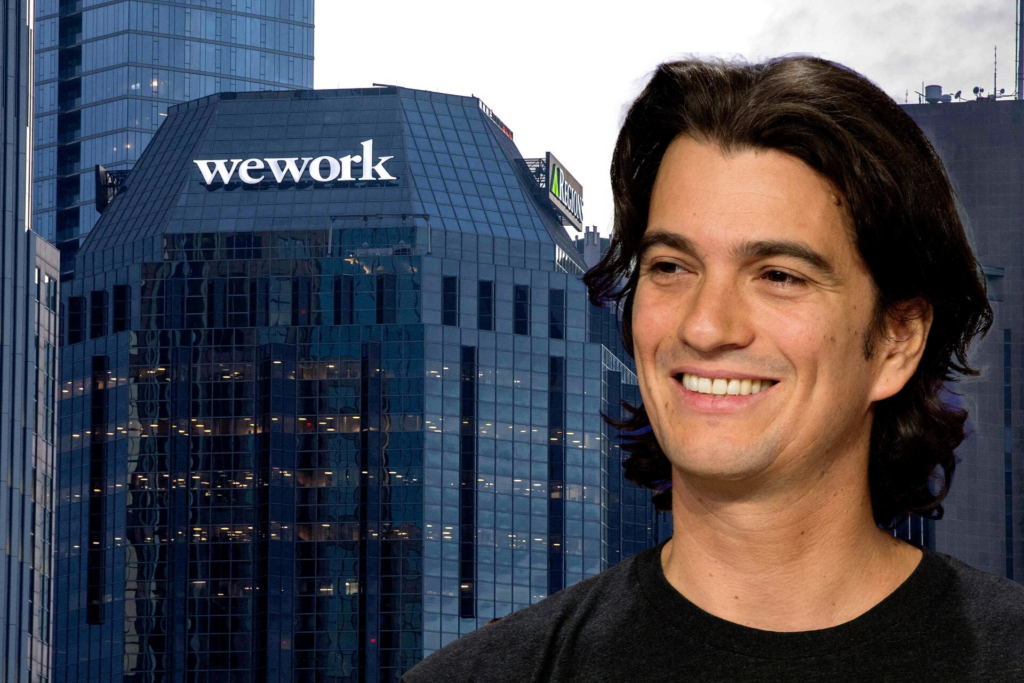
WeWork is another textbook case, and a far more costly one. Adam Neumann, the co-founder who drove WeWork to a peak valuation of USD 47 billion in 2019, built a culture saturated with personal appointments. He installed his wife Rebekah Neumann as Chief Brand and Impact Officer, gave her influence over who could succeed Adam as CEO, and filled senior roles with childhood friends and family members — including his brother-in-law as Chief Product Officer of WeWork Japan. As Fortune reported in September 2019, as many as 20 friends and family members of the Neumanns stood to be removed in the management overhaul that followed the company’s failed IPO. WeWork’s subsequent collapse — filing for bankruptcy in November 2023 with its valuation near zero — stands as one of the most dramatic corporate failures in modern history and a direct warning against letting personal ties override professional judgement.
Closer to home, nepotism remains a persistent and largely undiscussed challenge across Southeast Asian family-owned businesses. A 2019 PwC Family Business Survey found that 70% of family businesses across Asia-Pacific planned to hand leadership to a family member in the next succession cycle, often regardless of whether internal or external candidates might be more capable. The cost is not just cultural. It directly weakens a company’s ability to attract outside talent, scale professionally, and compete with leaner, merit-driven rivals.
Blind Hiring And The Method Behind the Movement
Blind hiring is meritocracy’s most practical and proven tool. It removes identifying information — names, universities attended, home addresses, even profile photos — from the early stages of the hiring process, forcing evaluators to focus solely on what a candidate can actually do, not who they are or where they come from.

The method gained global attention when American symphony orchestras began adopting physical screens during musician auditions from the 1970s, so that evaluators could not see the performer’s gender, race, or appearance. The number of women hired into major orchestras increased significantly in the decades that followed. A landmark study by economists Claudia Goldin and Cecilia Rouse, published in the American Economic Review in September 2000, confirmed that blind auditions increased the probability of women being advanced and ultimately hired — attributing between 30% and 55% of the increase in female new hires since 1970 to the adoption of screens. One physical screen. Decades of measurable impact.
The corporate world eventually followed. Deloitte, HSBC, and the BBC all implemented name-blind recruitment, removing candidate names and university information from applications so that assessors were evaluating skills rather than unconsciously favouring candidates based on background or school. Deloitte Australia’s blind audition strategy — removing names and universities from resumes during screening — was reported to have increased the number of women earning roles by 44%. In 2015, then-British Prime Minister David Cameron publicly committed to rolling out name-blind recruitment across all UK Civil Service departments — a government-scale endorsement of the principle that skills should always come before signals.
Blind hiring does not eliminate all bias — nothing does that entirely. But it systematically removes the easiest, most damaging shortcuts at the most consequential moment: before a candidate ever gets the chance to prove themselves. For SMEs hiring across borders, this principle is equally powerful. Evaluating a candidate from Batam or Jakarta on their skills, output, and track record — not on their geography or unfamiliarity — is exactly what a merit-first hiring culture looks like in practice.
The Companies That Got Meritocracy Right
Some of the world’s most successful companies have built their competitive edge on merit — deliberately, systematically, and at scale.
Google is perhaps the most studied example. In the early 2000s, Google designed one of the most rigorous hiring systems ever built, centred on structured interviews, standardised scoring rubrics, and multi-stage assessments reviewed by hiring committees rather than individual managers. Laszlo Bock, Google’s former Senior Vice President of People Operations, spent years at the company testing and refining what works. As Bock told Wired in 2015: “We looked at tens of thousands of interviews, and what we found is that structured interviews — where you ask the same question of every candidate and evaluate them the same way — are the best predictors of success.” Structured interviews, the research showed, were twice as predictive of actual job performance compared to unstructured conversations. Google also famously de-emphasised university prestige — by 2014, Bock confirmed that as many as 14% of employees in some teams had never attended a university at all. The degree was not the point. The ability was.
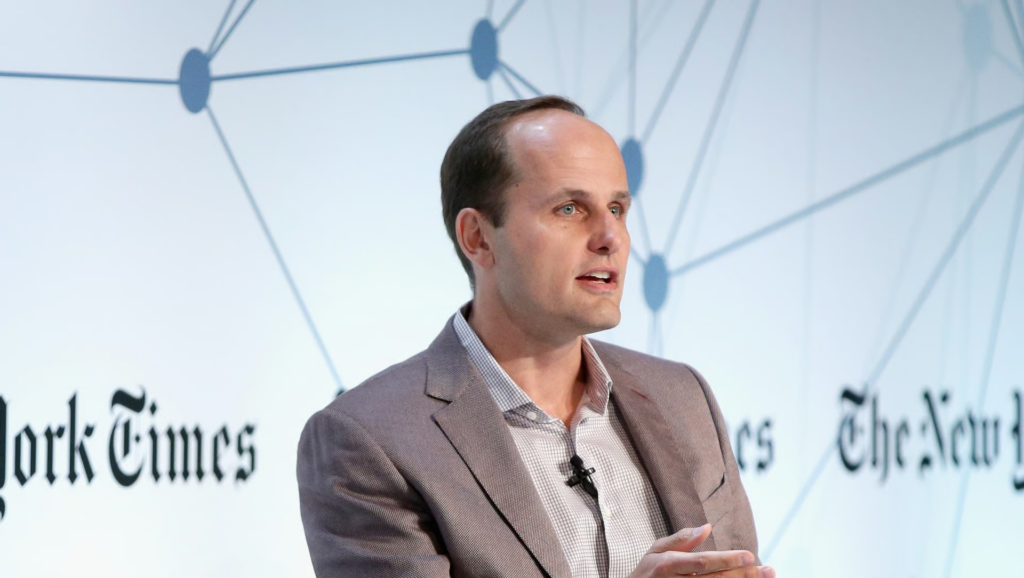
Unilever took a bolder, technology-driven approach. In 2016, the consumer goods giant partnered with HireVue and Pymetrics to replace traditional CV screening entirely for entry-level roles, using AI-powered cognitive games and video assessments to evaluate candidates on raw aptitude and potential. The results were striking: Unilever processed 250,000 applications to hire 800 candidates, saved over 50,000 hours of candidate time over 18 months, achieved a 75% reduction in recruitment time, saved over GBP 1 million annually, and hired its most diverse class ever — with a 16% increase in diverse new hires. The hiring manager never saw a CV until much later in the process. The merit came first.
Bridgewater Associates, the world’s largest hedge fund managing over USD 150 billion in assets, built its entire operating culture around what founder Ray Dalio calls an “idea meritocracy.” Documented in his 2017 book Principles, Dalio’s system means that every decision — including hiring and promotion — is subject to open debate, radical transparency, and data-driven assessment. At Bridgewater, an idea wins not because of who proposed it, but because it survives honest scrutiny. Whether or not one agrees with Bridgewater’s demanding internal culture, its four-decade track record of sustained financial performance is difficult to argue with.
The Numbers Don’t Lie, Meritocracy Pays
The business case for meritocracy is not philosophical. It is financial, and the evidence is compounding every year.
McKinsey’s Diversity Wins analysis found that in 2019, companies in the top quartile for ethnic and cultural diversity were 36% more likely to achieve above-average profitability than those in the bottom quartile — up from 33% in 2017 and 35% in 2014, showing that the advantage grows stronger over time. By McKinsey’s 2023 updated analysis, the advantage for top-quartile ethnic diversity companies had grown further still to 39%.
Merit-based hiring, by expanding the talent pool beyond familiar networks, produces exactly this kind of diversity — and with it, the diversity of thought that drives better decisions.
Conversely, nepotism carries a measurable and compounding performance cost. A 2025 study published in the Journal of Business Ethics found that leader nepotistic behaviour signals a breach of reciprocal fairness, eroding employee trust, reducing willingness to engage, and driving away the workers who actually have choices.
In practical terms, a nepotistic hiring culture drives away your best performers because talented people refuse to stay in environments where hard work goes unrewarded and connections determine advancement. They leave — and your weakest links stay.
For Singaporean SMEs, the cost equation becomes even more direct. According to Singapore’s Ministry of Manpower Report on Wage Practices 2023, total nominal wages continued to grow at 5.2%, and the real all-in cost of a single Singapore-based PMET hire — accounting for salary, CPF contributions, and benefits — commonly exceeds SGD 7,000 per month.
Meanwhile, skilled Indonesian professionals — many with degrees, English proficiency, cross-industry experience, and strong work ethics — earn between SGD 385 and SGD 770 per month (IDR 5,000,000 to IDR 10,000,000, converted at 1 SGD = 12,987 IDR). That gap is not a reflection of inferior talent. It is a reflection of cost-of-living differences — and for a business committed to meritocracy, it is a strategic opportunity hiding in plain sight.
The Smartest Hire You Haven’t Made Yet
Smart businesses in Singapore are already asking a fundamentally different question. Instead of “who do we know?”, the most forward-thinking operators are asking “who is the best person we have not yet found?” That shift in mindset — from network-based hiring to merit-based thinking — is what separates the businesses that scale from those that stagnate.
The evidence is clear. Meritocracy produces stronger teams, sharper performance, and lower turnover. Blind hiring removes the invisible filters that stop the best candidates from reaching the interview stage. And the opportunity to extend meritocracy across borders — hiring skilled, motivated professionals from Indonesia at a fraction of Singapore’s local salary cost — is one of the most under-utilised competitive advantages available to SMEs today.
This is precisely where BatamOn Asia was built to help. BatamOn connects Singapore’s entrepreneurs, CXO-level leaders, and SME owners with top-tier talent from Batam and across Indonesia — professionals who are assessed on skill, selected on merit, and ready to contribute from day one. The platform removes the guesswork, eliminates the favouritism, and puts the right person in the right role based on what they can do — not who they happen to know.
Whether you are looking to cut hiring costs without cutting standards, expand your team beyond the limits of a tight local market, or simply build a smarter, more performance-driven workforce, visit our homepage at BatamOn Asia and take the first step toward hiring on merit.
Sources:
[1] Total wages grew at a more moderate pace in 2023
[2] Diversity matters even more: The case for holistic impact
[3] Are Emily and Greg More Employable than Lakisha and Jamal? A Field Experiment on Labor Market Discrimination
[4] Report: Fair Employment Practices 2023
[5] A Social Exchange Perspective of Leader Nepotism: The Roles of Kinship and Self-Interest
[6] James Murdoch
[7] WeWork Founder Adam Neumann Is Out the Door—His Friends May Be Next
[8] Orchestrating Impartiality: The Impact of “Blind” Auditions on Female Musicians
[9] Blind Recruitment: Leveraging Equal Opportunity Hiring Practices for Large Employers
[10] Name-Blind Hiring: Eradicate Bias & Boost Diversity in Recruitment
[11] How to use structured interviews to assess candidates
[12] What Unilever’s AI Hiring System Looks Like Now
[13] Diversity wins